

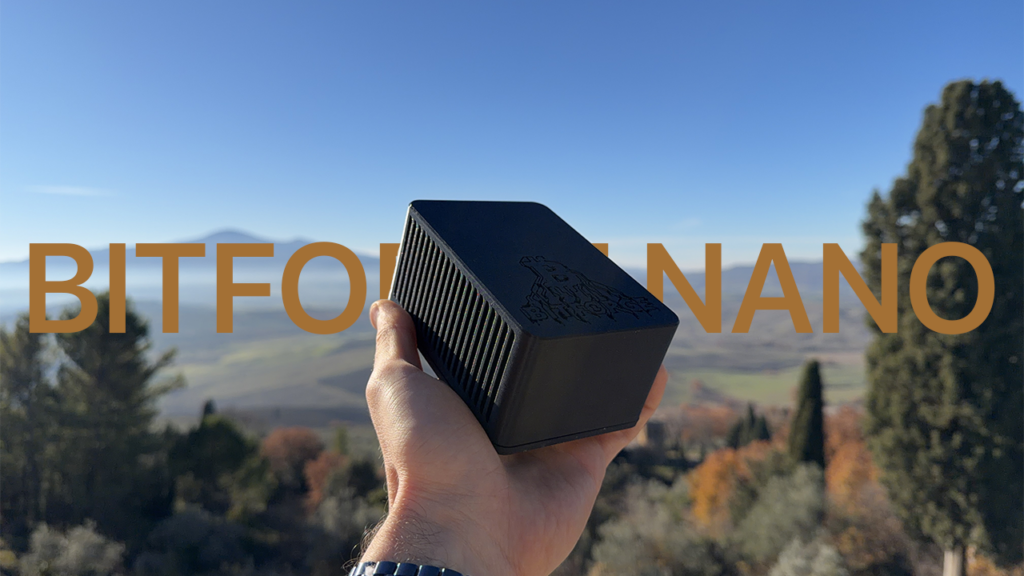
The Bitforge Nano is our new crown jewel, born from the collaboration with the superstar developer of the Bitaxe project: Want Clue. Taking some hints both from the Bitaxe and the design and form factor of the Canaan Avalon Nano 3S, WantClue and us, DTV Electronics, have probably created the best home miner ever to take the best of both worlds without basically any downsides.
In this review of the Bitforge Nano we will analyze this new product impartially judging if it’s the best solution for your or not.
👉 Get the Bitforge Nano with BTC or Fiat on the DTV Electronics Store (Worldwide Shipping) 🌍
Bitforge Nano Video Review
Can’t read right now? Check out our Bitforge Nano video review below. It covers everything in this written review and more:
Bitforge Nano: What It Is?
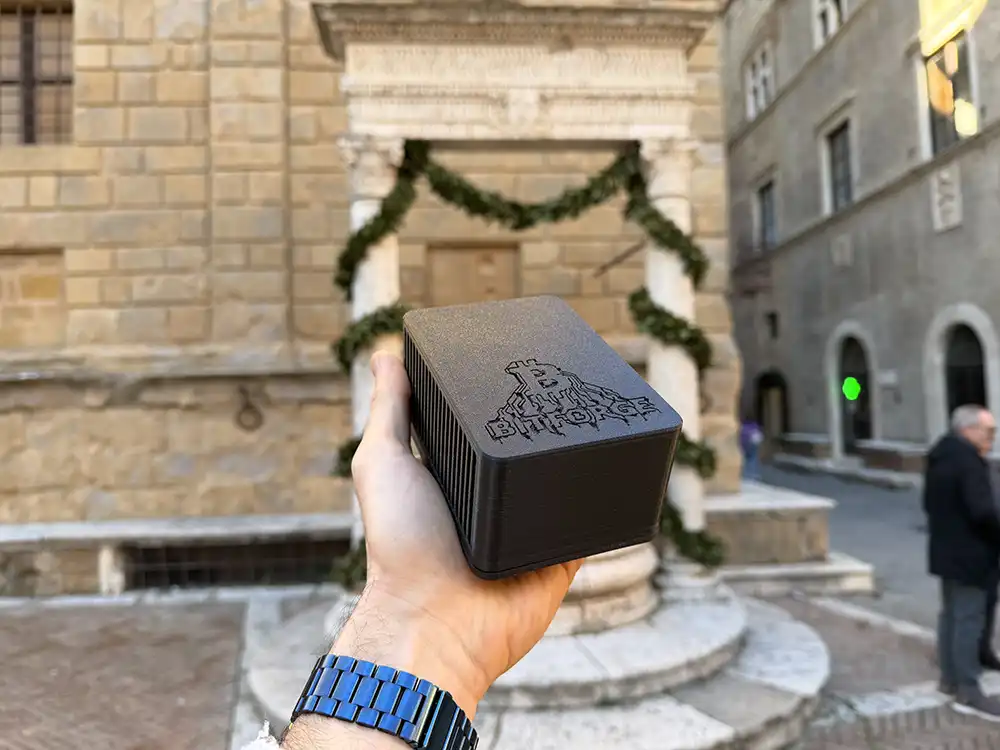
The Bitforge Nano is a compact Bitcoin miner built for home use. Think of it as a small device that participates in Bitcoin mining without the noise, heat, or massive power draw of industrial equipment.
At its core, it’s an ASIC miner. ASIC stands for Application-Specific Integrated Circuit, which means the chips inside are designed to do one thing exceptionally well: mine Bitcoin. Unlike regular computers or graphics cards, these chips can’t do anything else, but they’re incredibly efficient at what they do.
Setup takes about 5 minutes. You can configure it from your phone or computer through ForgeOS, the operating system that runs the device. ForgeOS is completely open source, meaning anyone can view, modify, or improve the code. This transparency appeals to hobbyists who want full control over their hardware.
Inside the Bitforge Nano are two Bitmain BM1370 chips. These are the same chips used in the popular Bitaxe Gamma, which has proven reliable in the compact mining space. With these chips, the Nano delivers up to 2.6 TH/s of hashing power while consuming just 40 watts.
Performance-wise, it’s comparable to the upcoming Bitaxe Gamma Turbo since both use the same chip architecture and hit similar hashrate numbers. The main difference is the physical design. While the Bitaxe has a more traditional square shape with a top-mounted fan, the Bitforge Nano takes design cues from miners like the Avalon Nano 3 and 3S. It features side-mounted fans that blow air horizontally through the device, creating better airflow across the heatsink.
This design choice keeps everything cool while maintaining whisper-quiet operation. You get solid mining performance in a package that won’t disrupt your space.
👉 Get the Bitforge Nano with BTC or Fiat on the DTV Electronics Store (Worldwide Shipping) 🌍
Bitforge Nano: Technical Specs
| DESCRIPTION | DETAILS |
|---|---|
| 🌐 Website | dtvelectronics.com / bitforge.info |
| 🏙️ Location | London, UK |
| 📅 Year Released | 2026 |
| 💻 Hardware Model | Bitforge Nano |
| 🚀 Hashing Power | ~ 2.6 TH/S |
| 🔨 Mining Algorythm | SHA-256 |
| 📡 Connectivity | Wi-Fi |
| 🔒 Security Features | Login with Username & Password |
| ⚙️ Compatibility | Compatible with Stratum V1 Pools and Solo Pools |
| 📈 Scalability | Stackable with more units |
| 💻 Power Consumption | ≈ 40W |
| 📏 Dimensions | 120 mm x 55 mm x X cm (4.72 in x 2.17 in x X in) |
| 🌐 Volume | 375.78 cm³ (22.95 in³) |
| ⚖️ Weight | 300 grams (10.58 oz, PSU excl.) |
| 📱 Mobile App | ForgeOS on iOS and Android (Web App) |
| 💬 Customer Support | Email to info@dtvelectronics.com |
| 🔄 Open Source | Yes |
| 💳 Price | From $249.99 |
| 🌍 Shipping Availability | Yes, Amazon Prime with DTV Electronics |
| 📜 Warranty | One-year warranty from the manufacturer |
| 📖 User Reviews | N/A |
How The Bitforge Nano Works
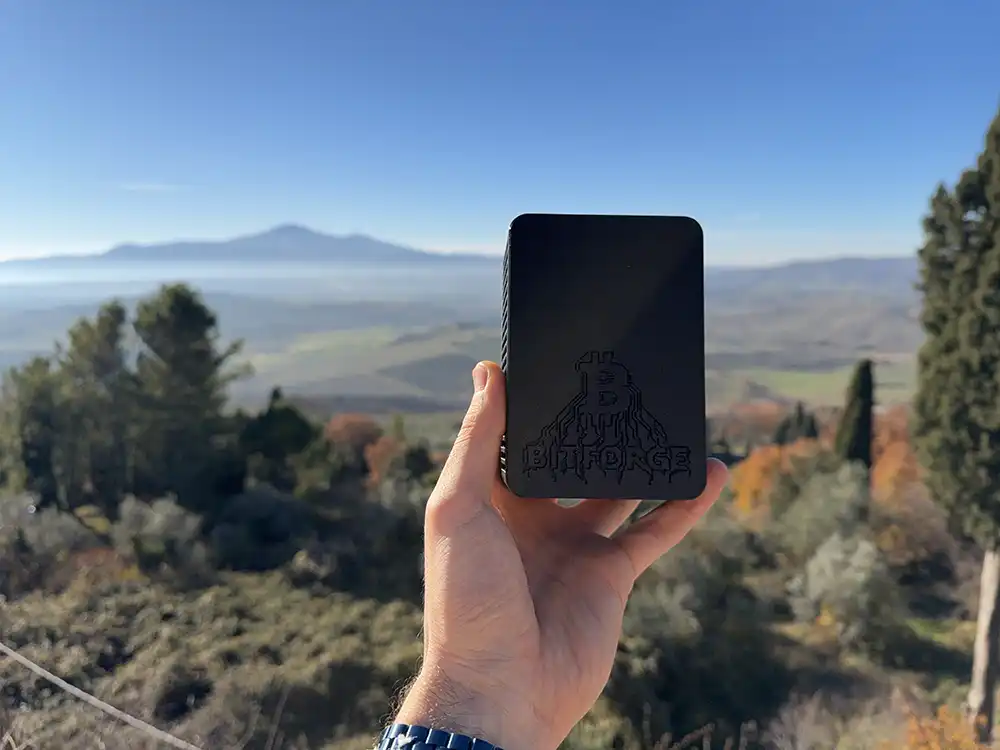
The Bitforge Nano operates using specialized ASIC chips optimized for Bitcoin’s SHA-256 hashing algorithm. Every element of its design focuses on processing hashes as efficiently as possible within its compact form. The device connects to power via a standard connection and draws just ≈ 40 watts, making it one of the most energy-efficient compact miners available. You can plug it into any wall outlet without worrying about your electricity bill.
Once powered on, the miner needs configuration to connect to your chosen pool. Most users point devices like this at solo mining pools such as ckpool (a hosted option) or Bassin Pool (which you can self-host). You’ll input your pool details, worker credentials, and network settings. After saving everything, the Bitforge Nano starts hashing.
With solo mining, you’re essentially playing the lottery. Your 2.6 TH/s gives you an extremely small chance of finding a valid block on your own. If you do hit a block, you get the full block reward plus transaction fees. If you don’t, you earn nothing. At current network difficulty, the odds are astronomical, but that’s part of the appeal for hobbyists. It’s like buying a lottery ticket that runs 24/7.
What sets this device apart is its open-source nature. Unlike many compact miners that run proprietary firmware, the Bitforge Nano embraces transparency. This lets enthusiasts tinker with the code, understand exactly how their miner works, and potentially optimize performance. The open-source approach appeals to hobbyists who value control and learning over plug-and-play simplicity.
The Nano can run continuously with minimal supervision. It won’t generate consistent earnings, but it provides a hands-on way to participate in Bitcoin mining and support the network. Think of it as an educational tool and lottery ticket combined rather than a serious income generator.
However, keep in mind that small home miners like this have actually found blocks while solo mining. When that happens, you get the full block reward of 3.125 BTC plus transaction fees. It’s rare, but it does happen more often than you might think with these compact devices.
Bitforge Nano Features
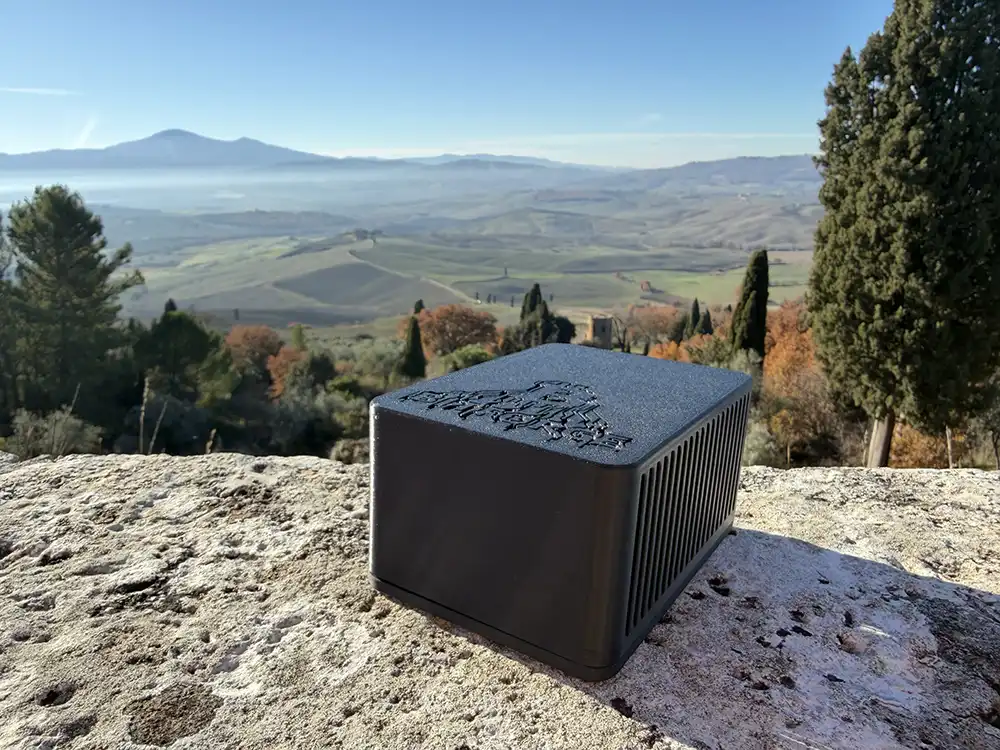
The Bitforge Nano packs several interesting characteristics into its small footprint. Its 2.6 TH/s hashrate is modest but respectable for a device this size. More impressive is its power efficiency at just ≈ 40 watts, roughly 17 J/TH. That efficiency rating puts it in competitive territory with other compact miners while keeping operating costs extremely low.
The physical design measures 120 x 55 x 57 mm (4.72 x 2.17 x 2.24 inches), with a volume of about 376 cm³ (23 in³). At 300 grams (10.58 oz), it’s lightweight and portable. You could easily fit several units on a desk or shelf.
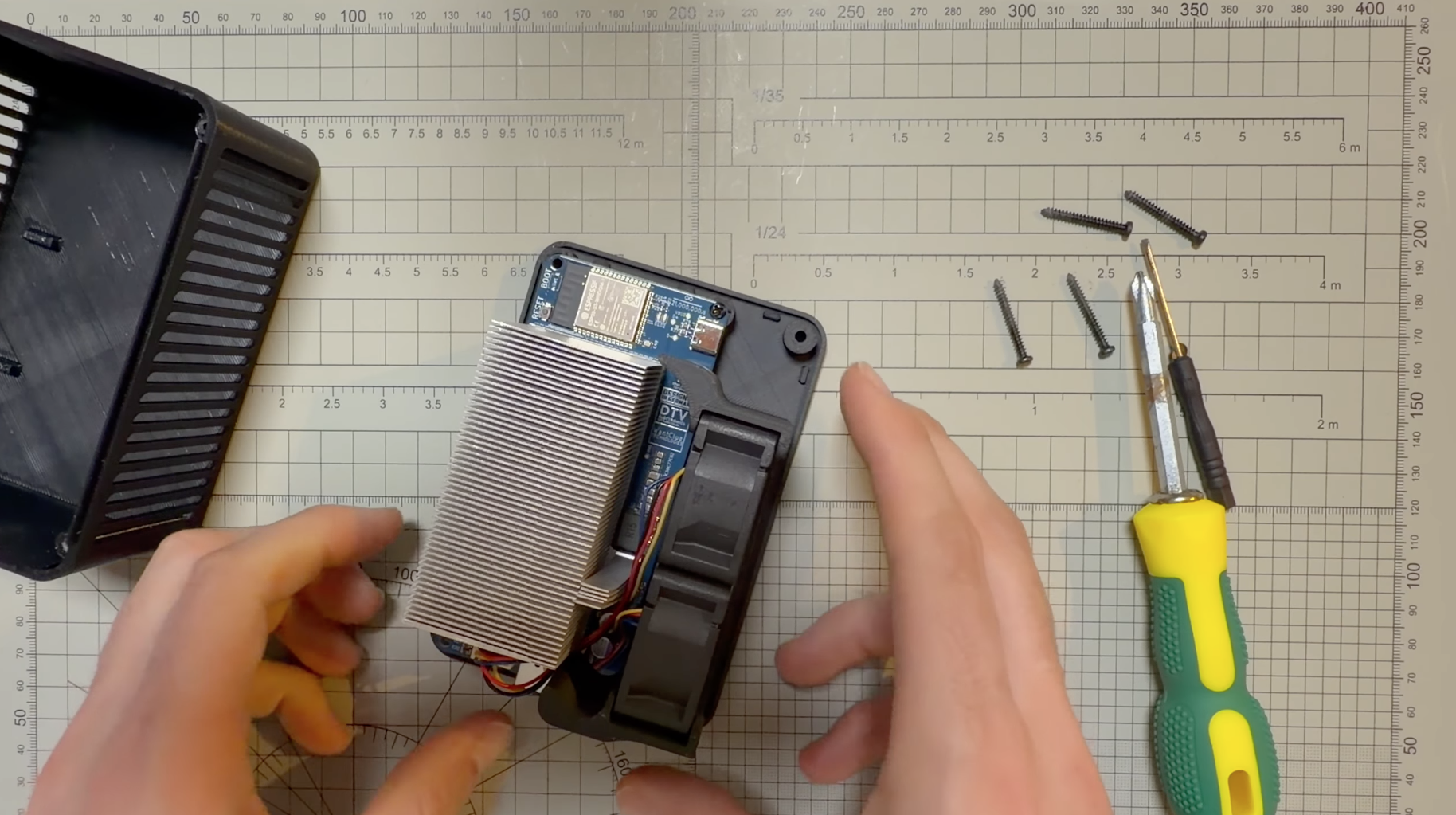
Cooling is handled by an advanced heatsink design that keeps noise levels around 30 dB. That’s quieter than a whisper, making it suitable for bedroom or office use without disturbing anyone. No loud fans screaming at you 24/7.
The standout feature is the open-source framework. The hardware and firmware are available for anyone to examine, modify, or improve. This transparency attracts a specific type of user: someone who wants to understand mining at a deeper level, experiment with custom configurations, or contribute to the project’s development.
Inside the package, you get the miner unit itself and whatever power supply is included.
The Bitforge Nano won’t compete with industrial mining operations. Its strength lies in education, experimentation, and decentralization. It gives users a real taste of Bitcoin mining without massive upfront costs or industrial-scale power requirements. For enthusiasts who value open-source principles and hands-on learning, it hits a sweet spot.
👉 Get the Bitforge Nano with BTC or Fiat on the DTV Electronics Store (Worldwide Shipping) 🌍
How To Start Mining With The Bitforge Nano
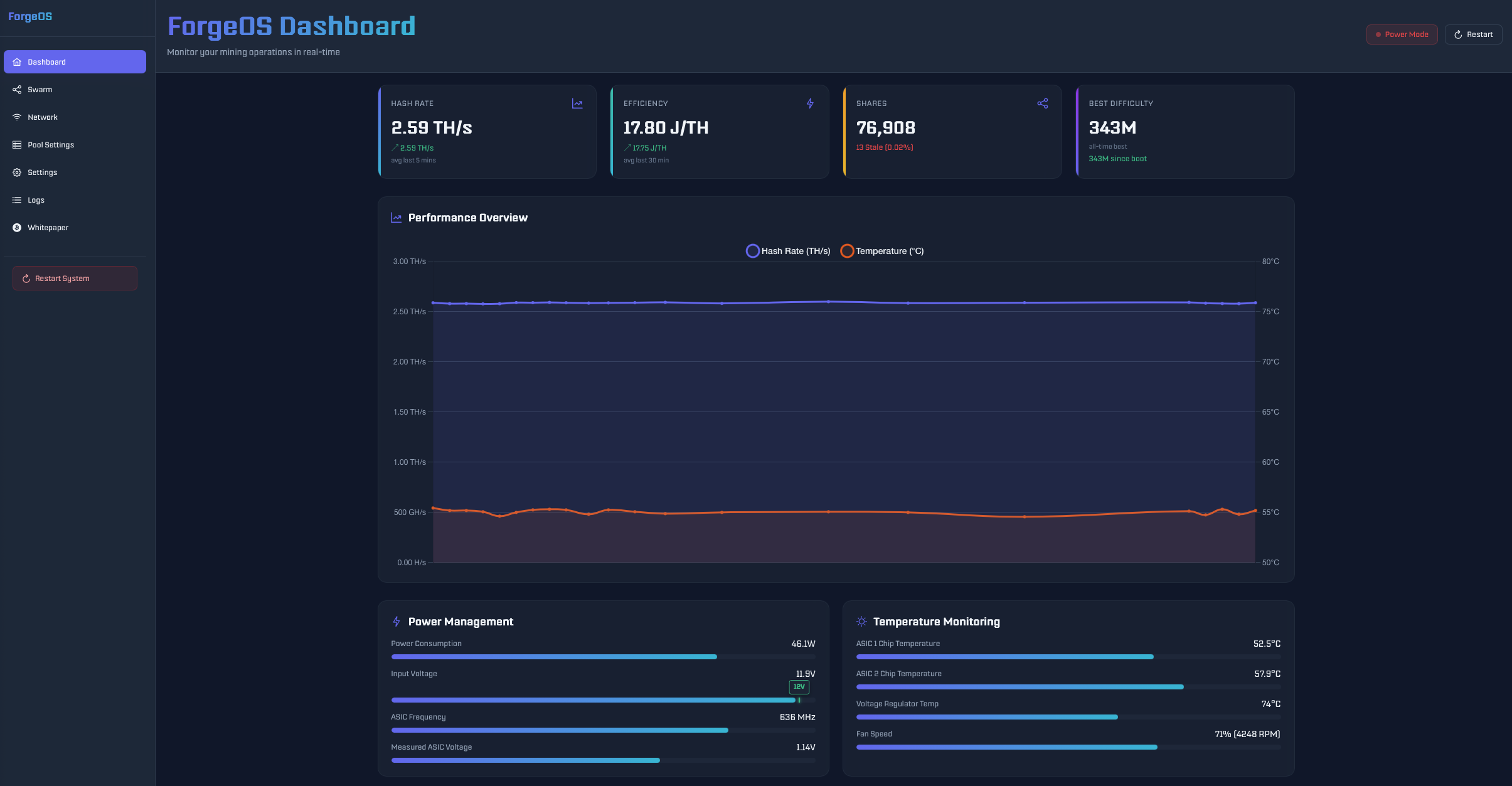
Getting started with the Bitforge Nano follows a similar process to other compact miners like the Bitaxe. The key difference is that instead of AxeOS, you’ll be working with ForgeOS, the open-source operating system that powers the device.
First, connect the Bitforge Nano to power using its cable and plug it into a wall outlet. The device will boot up and create its own Wi-Fi access point. This is where the setup begins.
Using your phone, tablet, or laptop, scan for available Wi-Fi networks. You should see the Bitforge Nano’s network appear. Connect to it. Once connected, open a web browser and navigate to the device’s configuration page. This is typically accessed through a local IP address (the exact address should be provided in the documentation or displayed on the device if it has a screen).
From the ForgeOS interface, you’ll configure several settings. Start by connecting the miner to your home Wi-Fi network. Enter your network name and password so the device can join your local network. This allows it to communicate with mining pools while you manage it from any device on the same network.
Next, configure your mining pool settings. For solo mining, most users choose either ckpool (a hosted solution) or Bassin Pool (which you can self-host). Enter the pool URL, your Bitcoin wallet address as the worker name, and any required password. Some pools use “x” as a standard password for solo mining.
You can also adjust performance settings if ForgeOS offers different power modes or frequency options. Higher frequencies increase hashrate but also boost power consumption and heat output.
Once everything is configured, save your settings. The Bitforge Nano will disconnect from its setup network, connect to your home Wi-Fi, and begin hashing. It may take a few minutes to ramp up to full speed as the chips warm up and stabilize.
After that, there’s nothing else to do. The miner runs continuously, sending shares to your chosen pool. You can check back periodically through the ForgeOS web interface to monitor temperature, hashrate, and uptime. Then you just wait and hope your lottery ticket hits.
Will I Make Money With This?
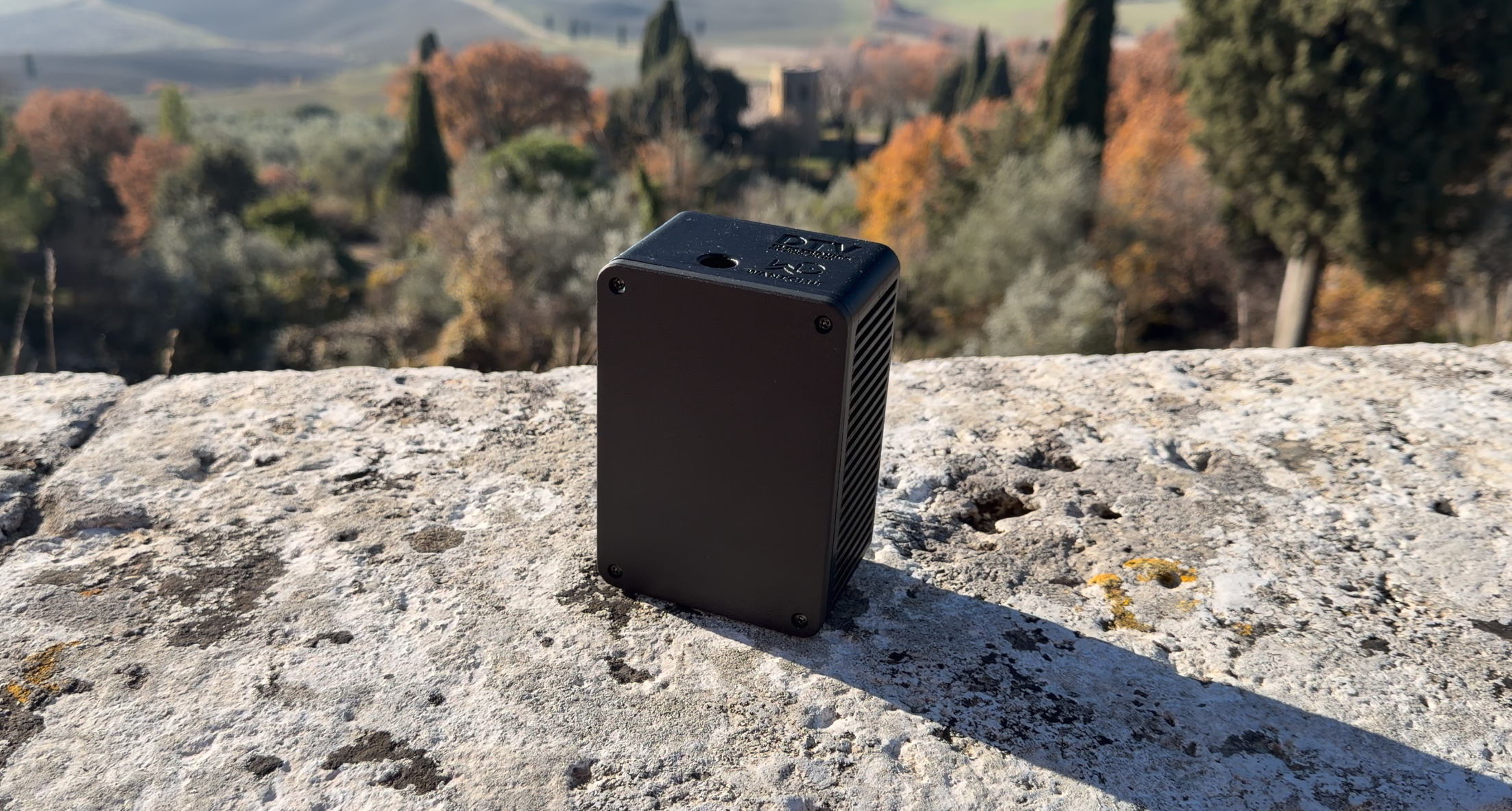
At 2.6 TH/s, the Bitforge Nano won’t generate meaningful income through pool mining. Your share of block rewards would amount to pennies per day, likely less than the electricity cost depending on your local rates. That’s just the reality of mining at this scale against massive industrial operations running thousands of times more hashpower.
Solo mining is where things get interesting, though you need to understand the odds. Assuming you’ve setup everything correctly, you’re essentially buying lottery tickets, except instead of waiting for a weekly drawing, you get a new chance every 10 minutes when a new Bitcoin block is mined. That’s 144 attempts per day, over 1,000 per week, and more than 52,000 per year.
Here’s a helpful way to think about it. Mining with 1 TH/s gives you about 46 times better odds than Powerball over a single day. Extend that to a week and it’s 108 times better. Over a year, it’s roughly 110 times better odds than playing the lottery regularly. Frequent attempts change everything.
The Bitforge Nano runs at 2.6 TH/s, so your odds are even better than that 1 TH/s baseline. You’re still talking about astronomical odds, but they’re real. Small miners do occasionally find blocks and collect the full 3.125 BTC reward plus transaction fees. When it happens, it’s life-changing money from a couple hundred bucks device.
The math looks something like this: at current network difficulty, your 2.6 TH/s gives you roughly a 1 in 2 million chance per block. Sounds terrible until you remember you’re getting 144 chances every single day. Over a year of continuous mining, your cumulative odds improve significantly.
But here’s what you should actually expect: nothing. Run this miner for education, for fun, for the satisfaction of participating in Bitcoin’s security. The W power draw costs maybe $3-5 per month depending on your electricity rates. That’s cheap entertainment and a hands-on learning experience.
If you’re someone who regularly buys lottery tickets, redirecting that money into a miner makes more sense. You get better odds, you learn about Bitcoin, you support the network, and your device keeps trying 24/7 instead of twice a week. Plus, you still own the hardware.
Just don’t count on hitting a block. Treat any potential win as a bonus, not the goal. The real value is in the experience itself.
👉 Get the Bitforge Nano with BTC or Fiat on the DTV Electronics Store (Worldwide Shipping) 🌍
Bitforge Nano Pros & Cons
| PROS | CONS |
|---|---|
| ✅ High hashrate for its class | ❌ No dust filter |
| ✅ Whisper-quiet operation | |
| ✅ ForgeOS interface | |
| ✅ Fully open source | |
| ✅ Perfect for solo mining | |
| ✅ Energy efficient | |
| ✅ Compact and portable |
Bottom Line
The Bitforge Nano offers an interesting entry point into Bitcoin mining for hobbyists and enthusiasts. With its 2.6 TH/s hashrate, ≈ 40W power consumption, and whisper-quiet operation, it checks the boxes for what a home miner should be: unobtrusive, efficient, and easy to use.
The fully open-source approach sets it apart. ForgeOS gives you complete transparency and control, appealing to tinkerers who want to understand or modify their hardware. The BM1370 chips deliver solid performance, matching upcoming competitors like the Bitaxe Gamma Turbo in a different form factor.
Let’s be clear about expectations. This isn’t a money-making machine. At current difficulty levels, you’re playing an astronomical lottery when solo mining. The odds of finding a block are tiny, though when compact miners do hit, they collect the full 3.125 BTC reward. That possibility, however remote, adds excitement to the experience.
What you’re really buying is education and participation. The Bitforge Nano lets you support the Bitcoin network, learn how mining works at a technical level, and experiment with open-source firmware. It’s a hands-on learning tool that happens to mine Bitcoin, not the other way around.
If you value open-source principles, want a quiet device that won’t spike your electricity bill, and enjoy the thrill of solo mining’s lottery aspect, the Bitforge Nano delivers. Just don’t quit your day job expecting this to pay the bills. It’s a hobby device through and through, and a good one at that.
FAQ (Frequenty Asked Questions)
Is the Bitforge Nano profitable?
Not in the traditional sense. At 2.6 TH/s, you won’t earn meaningful income through pool mining. The electricity cost (around $3-5 monthly) will exceed any pool rewards. Solo mining offers a chance at the full 3.125 BTC block reward, but the odds are astronomical. Think of it as a lottery ticket that runs 24/7 with better odds than Powerball. You’re buying it for education and participation, not guaranteed profit.
How loud is the Bitforge Nano?
Extremely quiet. At around 30 dB, it’s one of the quietest Bitcoin miners available. That’s roughly the sound level of a whisper or a quiet library. You can comfortably run it in a bedroom, office, or living room without any noise disruption. The side-mounted fans and efficient heatsink design keep it cool without needing aggressive, loud cooling.
👉 Get the Bitforge Nano with BTC or Fiat on the DTV Electronics Store (Worldwide Shipping) 🌍